
Starting Your First Journal: A Beginner’s Guide
Everything you need to know before you write your first entry. Covers choosing a journal, finding your voice, and building a sustainable practice.
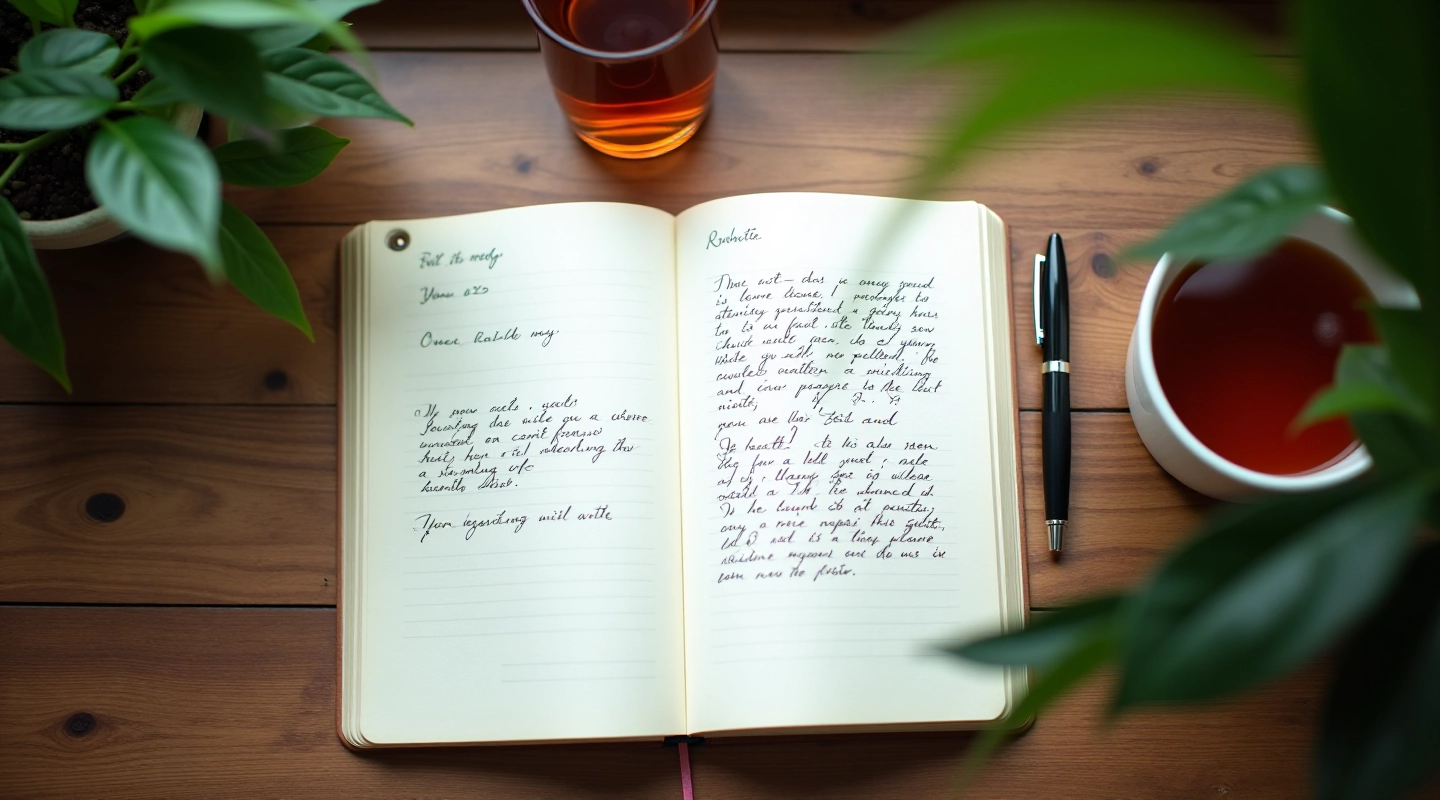
Starting a journal doesn’t require special skills or expensive materials. It’s just you, some paper, and your thoughts. Whether you’re looking to process emotions, track habits, or simply have a quiet space to think, journaling works. The hardest part isn’t finding the right words—it’s taking that first step.
We’ll walk you through everything you need to get started. You’ll learn how to choose a journal that feels right, find your writing voice without overthinking it, and build a practice that actually sticks.
What You’ll Learn
- How to select the right journal for your needs
- Techniques for overcoming the blank page anxiety
- Ways to find your authentic writing voice
- Simple habits that make journaling sustainable
Choosing Your Journal
The type of journal you choose matters less than you’d think. What’s important is that it feels inviting to you. Some people prefer lined pages, others want blank space. Some like hardcover journals that feel substantial, others want something lightweight they can carry everywhere.
Here’s what to consider: Will you write daily or occasionally? Do you want to carry it with you, or keep it on your nightstand? Would you prefer something you’re comfortable decorating, or something that feels more formal? There’s no wrong answer. A $3 notebook from the supermarket works just as well as a $30 leather journal.
The real secret? Pick something that makes you want to open it. If you love how it looks or feels, you’re more likely to actually use it.


Finding Your Voice
One of the biggest obstacles people face is worrying that their writing isn’t “good enough.” You’ll stare at that blank page thinking it needs to sound profound or well-written. But here’s the thing: nobody’s reading this except you. Your journal doesn’t care about grammar or perfect sentences.
Write like you talk. Use the words you’d actually use in conversation. If you naturally use short sentences, use them. If you ramble, ramble away. Your authentic voice—messy, casual, real—is exactly what your journal needs. Once you stop trying to impress an imaginary reader, the words come easier.
“Your journal is a conversation with yourself, not a performance for others.”
Three Ways to Get Started
Different approaches work for different people. Here are three simple methods to try.
Stream of Consciousness
Set a timer for 10 minutes and write continuously without stopping. Don’t worry about making sense. This approach helps you bypass the inner critic that blocks you from starting.
Guided Prompts
Use a question to guide your writing. “What’s on my mind right now?” or “What am I grateful for today?” Prompts give you a starting point when the blank page feels overwhelming.
Bullet Points
List-style entries feel less formal than paragraphs. Jot down thoughts, observations, or feelings as bullets. Quick, simple, and you’re still capturing what matters.

Building a Sustainable Practice
Consistency beats intensity. You don’t need hour-long journaling sessions. Five minutes a day, regularly, creates a stronger habit than an occasional marathon writing session.
Here’s how to make it stick: Pick a specific time. Morning coffee, lunch break, or before bed—it doesn’t matter. The key is choosing a time you’re likely to repeat. This becomes your journaling slot. Your brain starts to expect it.
Don’t aim for perfection. Some days you’ll write a paragraph, other days you’ll scribble a single sentence. Both count. The goal isn’t to fill pages—it’s to show up for yourself regularly.
Quick tips for staying consistent:
- Put your journal somewhere visible as a reminder
- Don’t judge what you write—it’s for you alone
- Start small: even 3 minutes counts
- Keep a pen nearby so there’s no friction
- Don’t worry about “good” entries—focus on regular ones

A Note on Your Practice
Individual journaling experiences vary from person to person. What works beautifully for one person might feel awkward for another, and that’s completely normal. Your journaling practice is uniquely yours—there’s no single “right way.” If a method doesn’t resonate with you after trying it, feel free to experiment with different approaches until you find what feels authentic and sustainable for your own situation.
Your First Entry Starts Now
You don’t need to wait for the perfect journal, the perfect moment, or the perfect words. You just need to start. Pick up a pen. Open that blank page. Write whatever comes to mind. It doesn’t have to be brilliant or profound—it just has to be yours.
Journaling is one of the simplest yet most powerful practices you can develop. It’s a conversation with yourself, a space to think clearly, and a record of your growth over time. Every single person who journals now started exactly where you are—with a blank page and a little uncertainty.
The only thing between you and becoming someone who journals is writing that first sentence. So go ahead. We’re rooting for you.

About the Author
Mindful Ink Editorial Team
Editorial Team
Written by the Mindful Ink editorial team, focused on practical guidance for mindful journaling and reflective writing practice.
Related Articles

Overcoming Writer’s Block: Five Prompts That Actually Work
When you don’t know what to write, these prompts unlock deeper reflection. Each one targets a different block.

Different Journaling Methods: Which One Fits You?
Stream of consciousness, bullet points, structured reflection—explore five approaches to find your style.

Using Journaling for Emotional Clarity and Growth
Learn how reflective writing helps you process emotions, identify patterns, and develop self-awareness.